From 1945, steelpan innovations in Trinidad and Tobago transformed discarded oil drums into what became the country’s National Instrument in 2025. Innovators like Winston “Spree” Simon, Ellie Mannette, and Anthony Williams pioneered tuning, and introduced chromatic scales and orchestration, while later generations introduced electronic pans, digital scoring, and global outreach.
From Spree Simon’s melody pan in 1945 to virtual panyards in 2025, steelpan innovation reflects resilience, creativity, and global reach. Each generation of innovators expanded the instrument’s possibilities, ensuring it remains both a cultural treasure and a modern musical force. 📜A Brief Timeline (1945–2025)
1940s–1950s: Birth of Melody & Tuning • Winston “Spree” Simon – Credited with creating the first melody pan (tenor pan) around 1945, enabling steelpan to play full tunes rather than just rhythm. • Ellie Mannette – Developed the convex shape of the pan and refined tuning methods, making instruments more stable and musical. • Anthony Williams – Introduced the spider web pan (1953), a breakthrough in note layout that improved chromatic playing. 1960s–1970s: Orchestration & Panorama Era • Panorama (1963) – Institutionalized panyards as rehearsal hubs, pushing arrangers to innovate with orchestral-style scoring. • Bertie Marshall – Advanced pan tuning, creating brighter tones and harmonics. • Innovations in orchestration – Bands began arranging calypso and classical music for large ensembles, elevating pan’s artistic status. 1980s–1990s: Globalization & Education • Pan in Education – Panyards became schools of music, teaching pan formally. • International tours – Steelbands spread pan globally, influencing music in North America, Europe, and Asia. • Pan Trinbago (founded 1971) – Advocated for steelpan as Trinidad’s national instrument, supporting innovation and preservation. 2000s–2010s: Technology & Modernization • Electronic Pan (E-Pan) – Invented by Salmon Cupid in the 2000s, allowing steelpan sounds to be played digitally. • Digital scoring & amplification – Bands integrated recording technology and sound systems into panyards. • Heritage recognition – Steelpan declared the national instrument of Trinidad and Tobago, cementing its cultural role. 2020s: Hybrid & Global Pan • Virtual panyards – Bands livestream rehearsals and Panorama performances, connecting diaspora audiences. • Youth innovation – Programs encourage young arrangers and tuners to experiment with new sounds. • Hybrid instruments – Integration of pan with electronic music and fusion genres. • Global recognition – Steelpan festivals and competitions worldwide showcase Trinidad’s innovation.THE INNOVATORS
Bertram "Bertie" Marshall
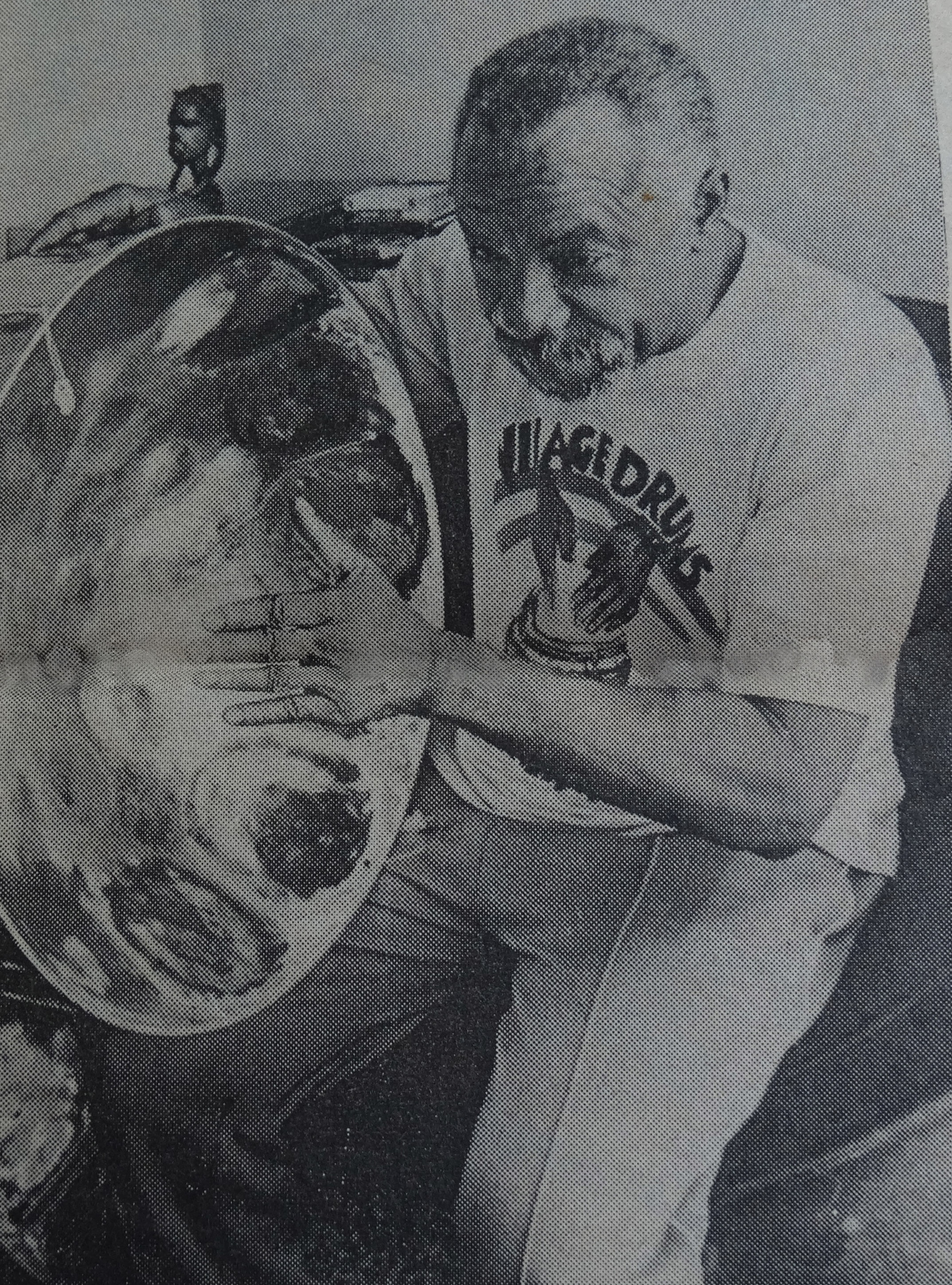
This legendary Trinidadian pan tuner and innovator is often called the “tuner’s tuner” for his revolutionary contributions to the steelpan. His work transformed the instrument from a basic percussive tool into a sophisticated musical instrument capable of complex harmonies.
Key Innovations and Inventions
Harmonic Tuning: In 1956, Marshall revolutionized the sound of the pan by introducing harmonic tuning. By tuning notes by octaves and overtones, he gave the instrument its distinctive “bright” and complex tonal quality. He was the first to amplify the steelpan electronically, and helped develop the Double Tenor steelpan with Vincent Pompey.
He acted as Captain, tuner, and arranger for the Laventille Highlanders Steel Orchestra for several decades until the 1970s, when the Desperadoes Steel Orchestra enticed him up to their lanyard as full-time tuner. Marshall's arrangement of Handel's "Every Valley Shall Be Exalted" won the first "Bomb" competition in 1963, and was instrumental in bringing the steelpan into churches to accompany hymns.
Scientific Contribution:
Participated in the first scientific studies of the steelpan at CARIRI, validating the production process.
Recognition:
Awarded the Chaconia Medal (Gold) in 1972 and the Order of the Republic of Trinidad and Tobago in 2008.Died in 2012 and was honored by his band at a gathering at his home on Erica Street in Laventille where the new Highlanders panyard now stands.
Anthony Williams
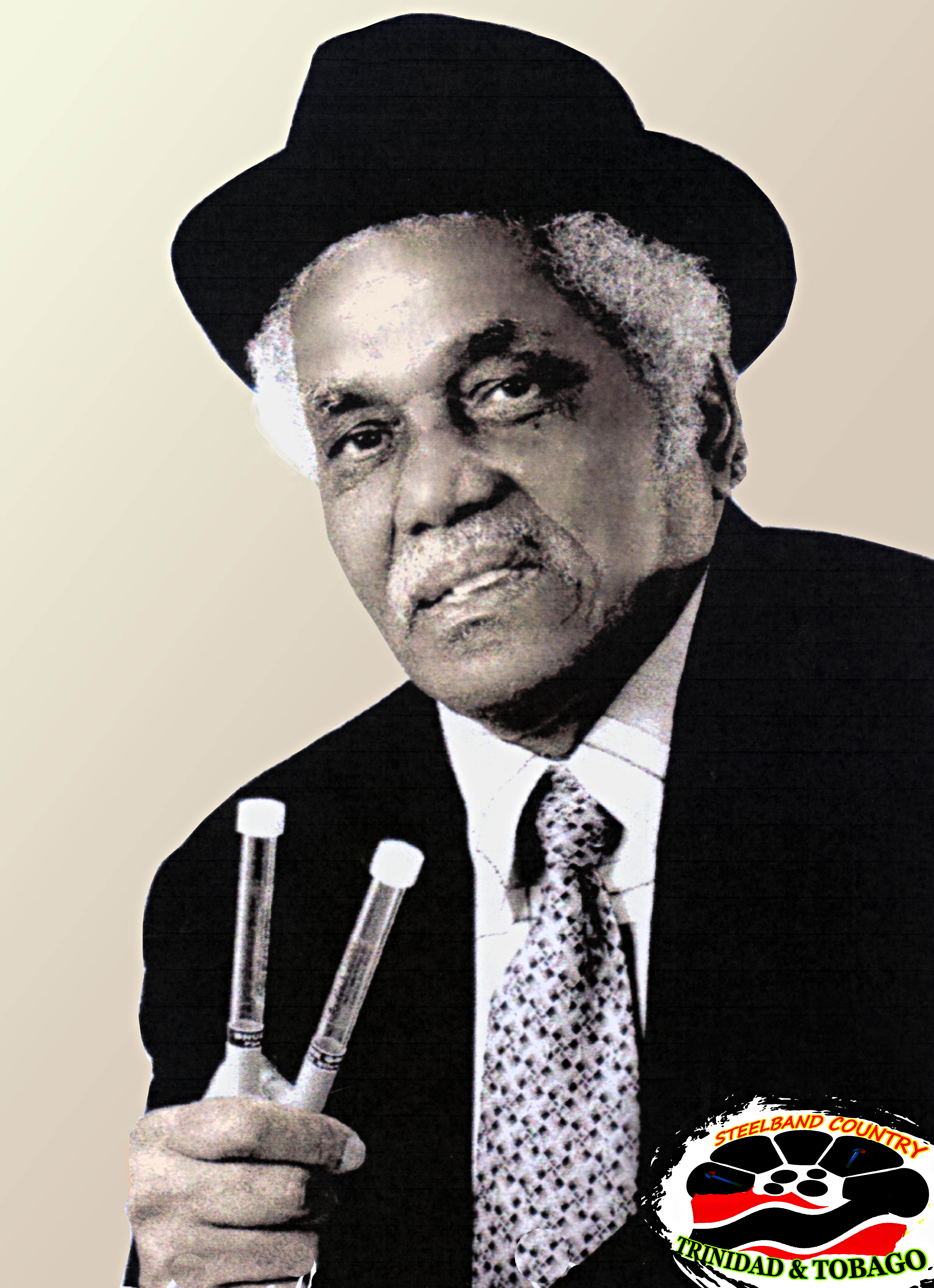
Anthony Williams was born in 1931 in Port of Spain and grew up in St. James. In the early 1940s, he began a lifelong involvement with the steelband movement. He played with Harlem Nightingale Steelband at age 12 for the first street Carnival after World War II and subsequently co-founded several bands including North Stars, the most successful band of its era, which he captained from the early 1950s.
North Stars did several overseas tours and won many local competitions, including the first Steelband Panorama Competition in 1963. Williams was also one of the players in the Trinidad All Steel Percussion Orchestra’s (TASPO) historic 1951 tour to Britain and parts of Europe.
Key Innovations and Inventions
- Created the Spider Web tenor pan in 1953, using a circular tuning pattern for more consistent, harmonic sound.
- Standardized the arrangement of notes on the steelpan and shifted playing from the “around-the-clock” method to the Circle of Fifths.
- First tuner to compose complete tunes especially for the steelband.
- Recorded the album “Ivory and Steel” with pianist Winifred Atwell, a pioneering quality recording of the steelband playing the classics.
- First to put pans on wheels for mobility, create pans from flat sheet metal, and design an "oversized" bass pan.
Recognition
Awarded the Chaconia Medal (Gold) in 1992, the Order of the Republic of Trinidad and Tobago in 2008, and honorary doctorates from UWI and Northern Illinois University.
Dr. Elliot “Ellie” Mannette (1927–2018)
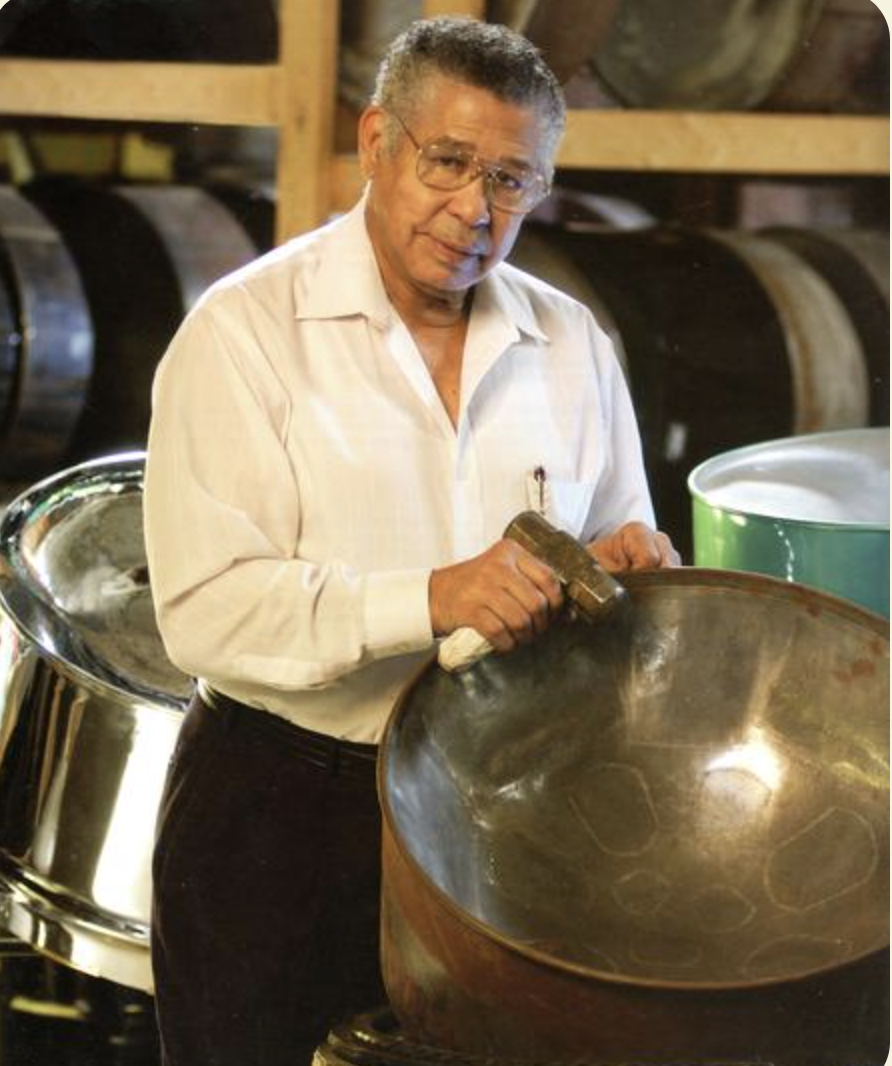
Born in Sans Souci, Trinidad, Mannette developed a passion for metal and tools for metalworking as a child and became engaged in the evolution of the phenomenon of sounding steel. He is known as the “father of the modern steelpan” for his remarkable innovations that created the instrument we know today.
Key Innovations and Inventions
- First to use a discarded oil barrel to build a steel pan, sinking the lid to create a tensed playing surface and firing the metal to improve acoustic properties.
- Founder of the Oval Boys Band (later Invaders Steel Orchestra) and member/tuner for TASPO, which showcased the steelpan at the Festival of Britain in 1951.
- First to use a 55-gallon oil barrel instead of biscuit tins or soap boxes.
- Sank the top of the oil drum into a concave shape, creating more space to place notes and achieving better isolation between pitches.
- Use of the whole tone scale on two resonance bodies became a widely common standard.
Scientific Contribution
After helping build the US Navy Steelband, Mannette spent much time in the United States creating other steelbands and eventually migrated in 1967. In 1991, he was invited by West Virginia University to teach pan building and playing, leading to the University Tuning Project and Mannette Steel Drums.
Recognition
Hummingbird Medal (Silver) of Trinidad and Tobago (1969); 1999 National Heritage Fellowship from the US National Endowment for the Arts; Honorary Doctorate from the University of the West Indies (2000); Chaconia Medal Silver (2000); Hall of Fame of the Percussive Arts Society (2003); work showcased at the Smithsonian Institution.
Jim "James" Phillip
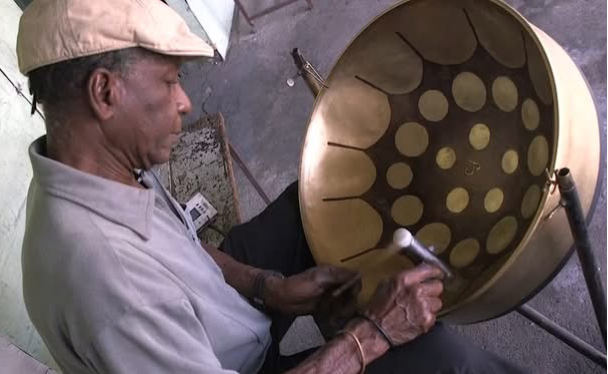
Jim Phillip is a pan tuner, innovator, and educator from Chaguanas, Trinidad and Tobago. He has contributed to the development of the steelband movement through designs that improved the tuning of traditional and modern steelpans. He is best known for crafting traditional pan instruments to solve practical issues like weight and portability.
Key Innovations and Inventions
- Developed the Percussive Pan (Guitar Pan) in 1986, a tenor pan with a guitar-like fretboard layout, played with a pick while mounted on a stand. Also created a bass version.
Scientific Contribution
Phillip is an educator and researcher in pan technology and development. He has worked with the University of Trinidad and Tobago, as well as international organizations and universities in the USA and Europe to develop curricula that promote pan education and technological research.
Recognition
Recipient of the Rudolph Charles Pan Innovation Award; recognized by UNESCO as a leader in pan innovation, pedagogy, and instrumentation.
Gerard (Gerald) Clarke
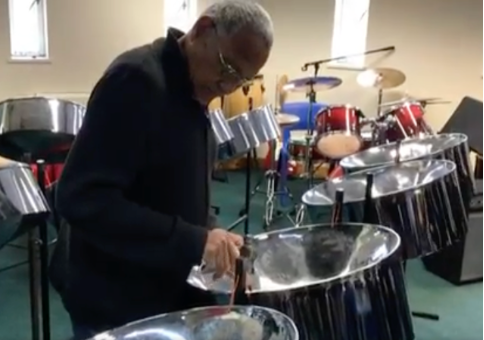
Born in 1943 in San Fernando, Gerard (aka Gerald) Clarke is a highly regarded Trinidad-based steelpan tuner and maker known for his expertise in crafting finely tuned pans. He has worked with notable bands such as Desperadoes, Starlift, St. Joseph's Convent, and St. Mary's College. Recognized as a skilled technician in the pan fraternity, he is also a tuner and maker for the British Philharmonic Steel Orchestra, and has worked with educational institutions to promote pan education and research. He has been recognized for his longstanding work with StarLift when Pan Trinbago invited that group to join the Steelbands Association.
Key Innovations and Inventions
- Expertise in crafting finely tuned pans for top bands and orchestras.
Scientific Contribution
Worked with educational institutions to promote pan education and research.
Recognition
Recognized for longstanding work with StarLift and other bands.
Augustus Peters

Augustus “Gusy” Peters is a legendary double-tenor tuner and maker from Trinidad and Tobago, widely recognized as a premier tuner in the global steelpan industry. Known for his expert craftsmanship, he is the founder of Augustus Peters Steelpans (APS), a brand that provides professional tuning, crafting, and tuning services. Peters’ work is sought after internationally; he has traveled as far as Japan and Canada to tune and maintain instruments for major events like the Caribana Festival. His APS brand instruments have been featured on high-profile platforms, and in September 2014, Pan Trinbago officially acknowledged his outstanding contribution to the steelband movement, celebrating him as one of the best tuners in the world.
Key Innovations and Inventions
- APS brand instruments featured internationally; traveled as far as Japan and Canada to tune and maintain instruments for major events like the Caribana Festival.
Scientific Contribution
Promotes pan education and technological research globally.
Recognition
Officially acknowledged by Pan Trinbago in 2014 as one of the best tuners in the world.
Professor Emeritus Brian Copeland
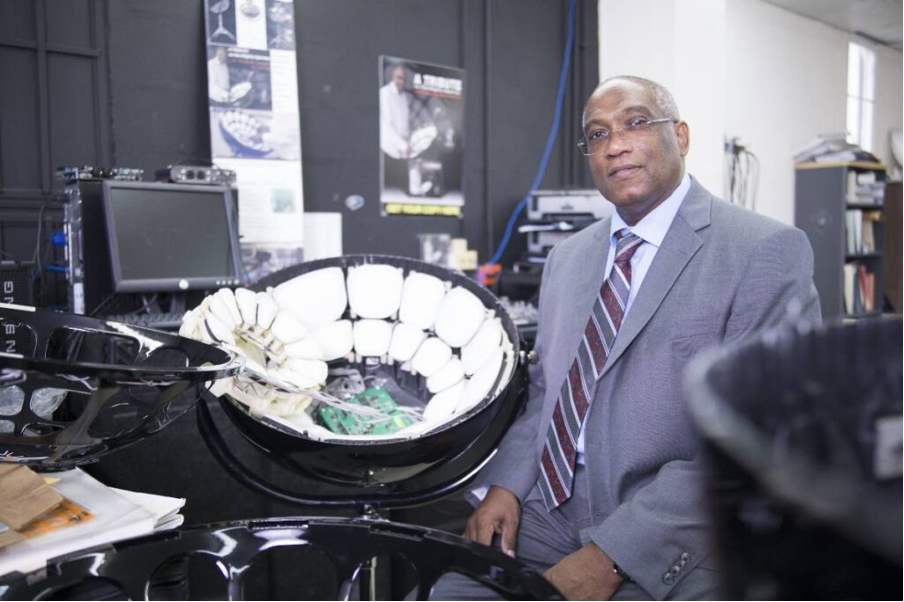
Professor Emeritus Brian Copeland, Ph.D. was the Pro Vice-Chancellor and Campus Principal of UWI's St. Augustine campus from 2016-2022. He has also served as Professor in Electrical and Computer Engineering, Dean of the Faculty of Engineering, and Head of the Department of Electrical and Computer Engineering. His focus areas have been in Digital Electronics and Microprocessor Systems Design and Control Systems.
Key Innovations and Inventions
- Convener of the Steelpan Research Centre, UWI, and former Member of the Board of Directors, CARIRI.
- Co-ordinated the Steelpan Initiatives Project at UWI, which saw the development and patenting of the G-Pan and the Percussive Harmonic instrument (P.H.I.), an electronic form of the traditional steelpan.
Recognition
First recipient of the Order of the Republic of Trinidad and Tobago (ORTT) in 2008; joint recipient of the Chaconia Medal Gold as a member of the G-Pan development team in 2007; Guardian Life Premium Teaching Award (2002); BP/AMOCO Fellowship Award for Senior Academic Staff at UWI (2001); LASPAU/Fulbright scholarship for Doctoral program at the University of Southern California, Los Angeles (1987).
Think you've mastered this topic?
Test Your Knowledge →